Motorcycle Crash Card or Helmet Tag? An Honest Guide for UK Riders
If you've spent any time around bikes in the UK, you'll have seen it. A small green dot stuck to the back of a helmet.
Most riders who wear one know what it means. Plenty of people don't. And that, in a way, is the whole point of this post.
Because when you crash, the people who help you won't know your name, your blood type or who to call. Unless you've found a way to tell them.
The crash card has been the UK's answer to that for years. Now there are tap-to-read helmet tags too. So which should you use? Let's go through it honestly, including the bits where the old-fashioned card wins.
What is a motorcycle crash card?
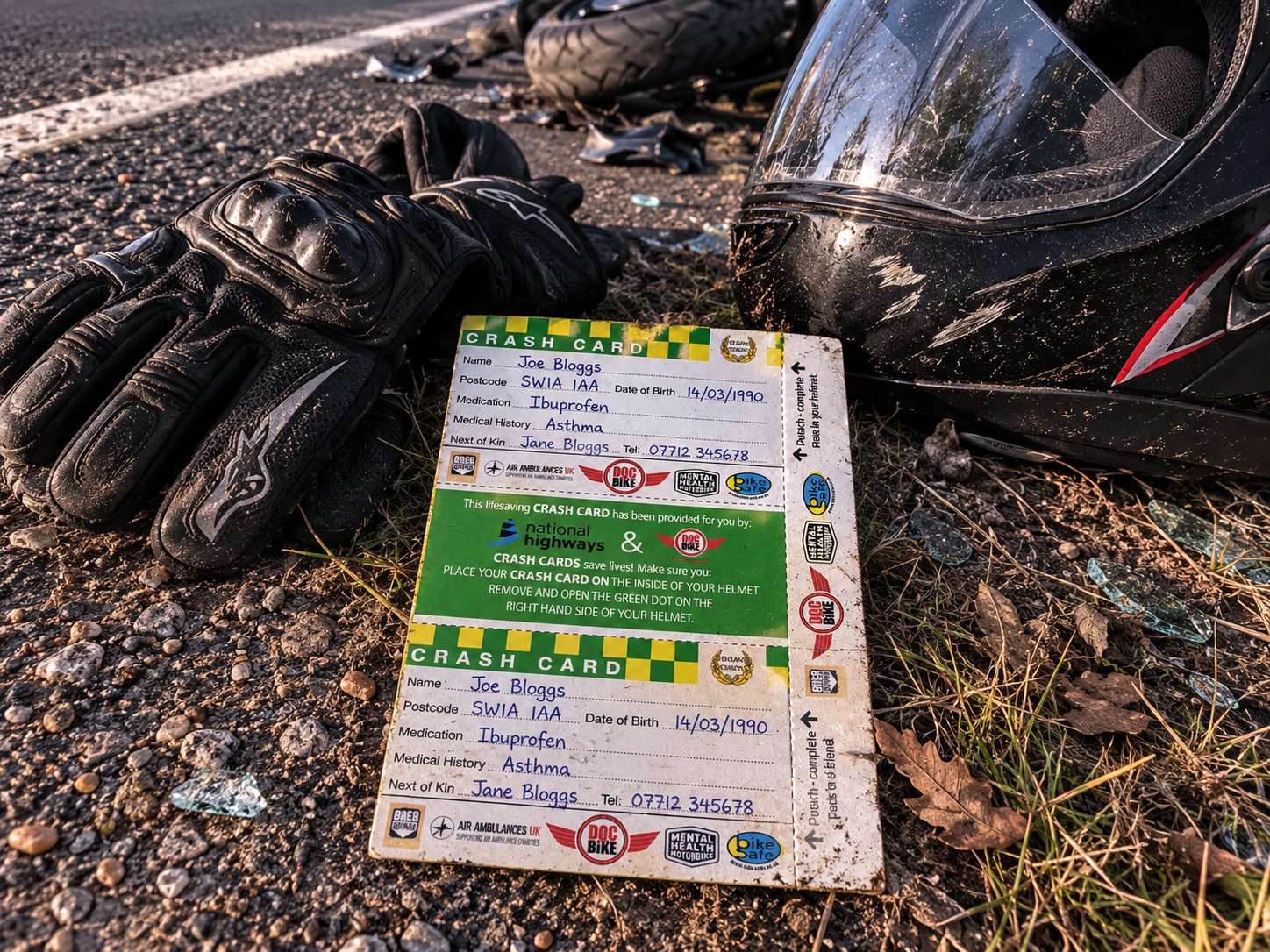
A crash card is a small card you fill in by hand with your important details. Usually that's:
- your name
- any medical conditions, allergies and medication
- your blood type, if you know it
- one or two emergency contacts
You tuck the card inside your helmet. Then you put a green dot sticker on the outside, so anyone helping you knows there's a card to look for.
The cards and stickers are usually free from local road safety partnerships and some fire and rescue services. If you've done a Biker Down course, you may have been given one there.
What the green dot means
The green dot is a signal. It says: "There's information about me inside this helmet."
It only works if the person helping you knows what the green dot means. Paramedics and other first responders are often taught to look for it. A passer-by who stops to help might not be.
One more thing worth knowing: anyone helping a rider is told not to take the helmet off unless they really have to, because it can make a neck or spine injury worse. So the information inside your helmet might not be reached straight away.
Where crash cards are brilliant
Let's be fair to the crash card. It has real strengths:
- It's free, or close to it.
- It needs nothing to work. No phone, no signal, no battery.
- It's simple. Anyone can read a card.
- It's widely recognised by emergency services in the UK.
If you ride with nothing at all right now, a crash card is a big step up. Go and get one.
Where crash cards fall short
But anyone who's carried one for a few years will know the weak spots.
They go out of date. You change your phone number. Your partner changes theirs. You start a new medication. The card in your helmet still says what it said three years ago, and in a crisis nobody knows that.
They wear out. Sweat, rain and helmet padding aren't kind to paper. Ink fades and cards get crumpled or lost when you clean your lid.
There's not much room. A long medical history, or a list of allergies, won't fit on a small card.
Someone has to find it. The card is hidden inside your helmet, and the green dot only helps if the person looking knows what it means.
How a tap-to-read helmet tag works
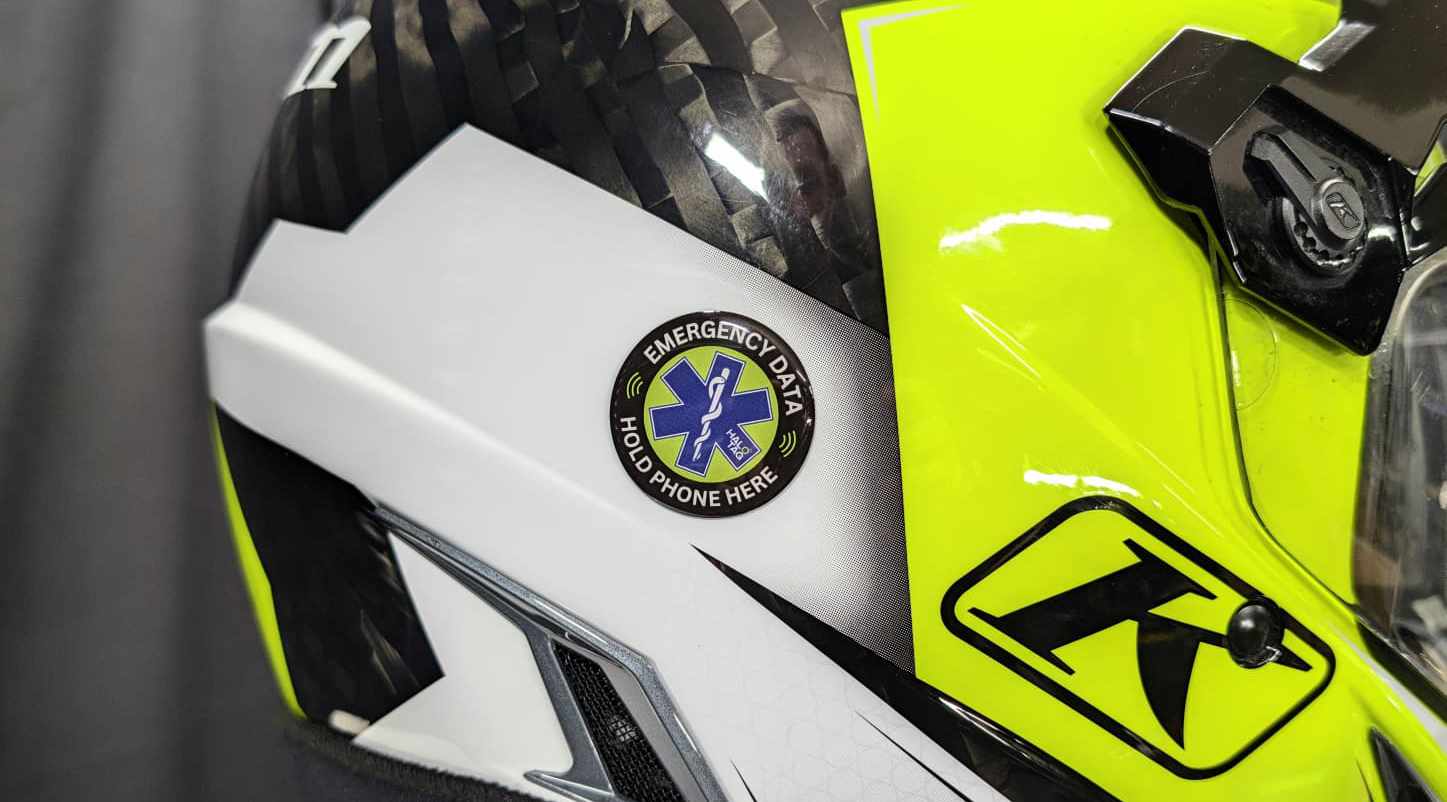
A helmet tag like Halo Tag does the same job as a crash card in a different way.
You stick a small tag on the outside of your helmet, or clip it to your kit. Your details live in an online profile that you fill in and keep up to date yourself.
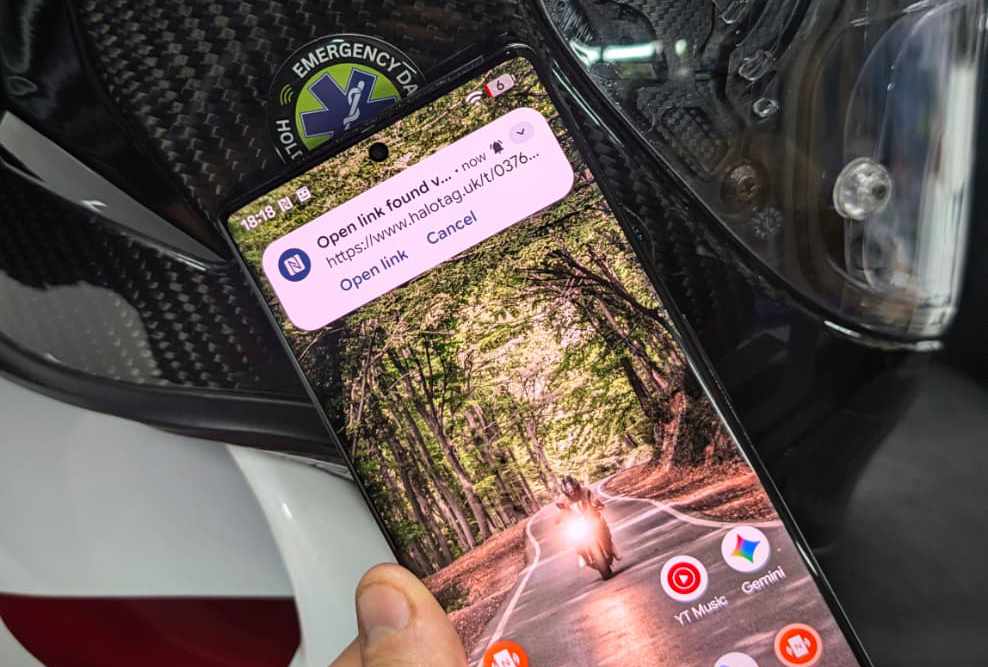
When someone taps the tag with their phone, your profile opens straight away. No app to install, no login, no passcode. They see your name and photo, your medical facts, and your emergency contacts, with a button to call each one.
Crash card vs helmet tag, side by side
| Crash card | Halo Tag | |
|---|---|---|
| Cost | Free | One-off price per tag |
| Needs a phone to read | No | Yes, a quick tap |
| Where it sits | Inside the helmet | Outside, on the helmet or kit |
| Keeping it up to date | Write a new card | Change it online, any time |
| How much detail | What fits on a card | Your full medical profile |
| Photo of you | No | Yes |
| Call your contacts from it | No | Yes, one tap |
| Hide details when you want | No | Yes, section by section |
| Survives rain and sweat | Not for long | Yes |
Which should you use?
Honestly? Both.
They're not rivals. They work in different ways, and together they cover each other's gaps.
The crash card works without a phone and is recognised everywhere. The helmet tag sits on the outside where it's easy to find, holds far more detail, and stays up to date because you can change it any time. Put a green dot and a Halo Tag on the same helmet, and whoever reaches you first has two ways to find out who you are.
If you can only pick one, ask yourself one question: would my crash card still be right today? If you're not sure, a tag you can update from your phone is the safer bet.
Before your next ride
Whatever you choose, take five minutes this week to do three things:
- Check your details. Are your emergency contacts' numbers still right? Is your medication list current?
- Tell someone. Make sure the people on your list know they're on it.
- Make it visible. A green dot, a Halo Tag, or both, where someone kneeling beside you will see it.
It's the kind of job that's easy to put off. But it's five minutes now against the most important few minutes of your life.
Buying for a rider this Christmas? Our guide to Christmas gifts for motorcyclists has ten ideas they'll actually use.
Get a Halo Tag for your helmet →